
Business hours
- Monday [8 a.m. - 5 p.m.]
- Tuesday [8 a.m. - 5 p.m.]
- Wednesday [8 a.m. - 5 p.m.]
- Thursday [8 a.m. - 5 p.m.]
- Friday [8 a.m. - 5 p.m.]
- Saturday [10 a.m. - 4 p.m.]
- Sunday [10 a.m. - 4 p.m.]
Wildlife we treat
Scratching and chirping in the soffit, droppings accumulating on the exterior wall, insulation torn apart in the attic. You have uninvited tenants — and they're not paying rent.
Birds that move into building structures cause real damage: droppings contamination (histoplasmosis), insulation degradation, vent obstruction, fire risk from accumulated nesting materials, and persistent noise. The longer they stay, the greater the damage — and the cost.
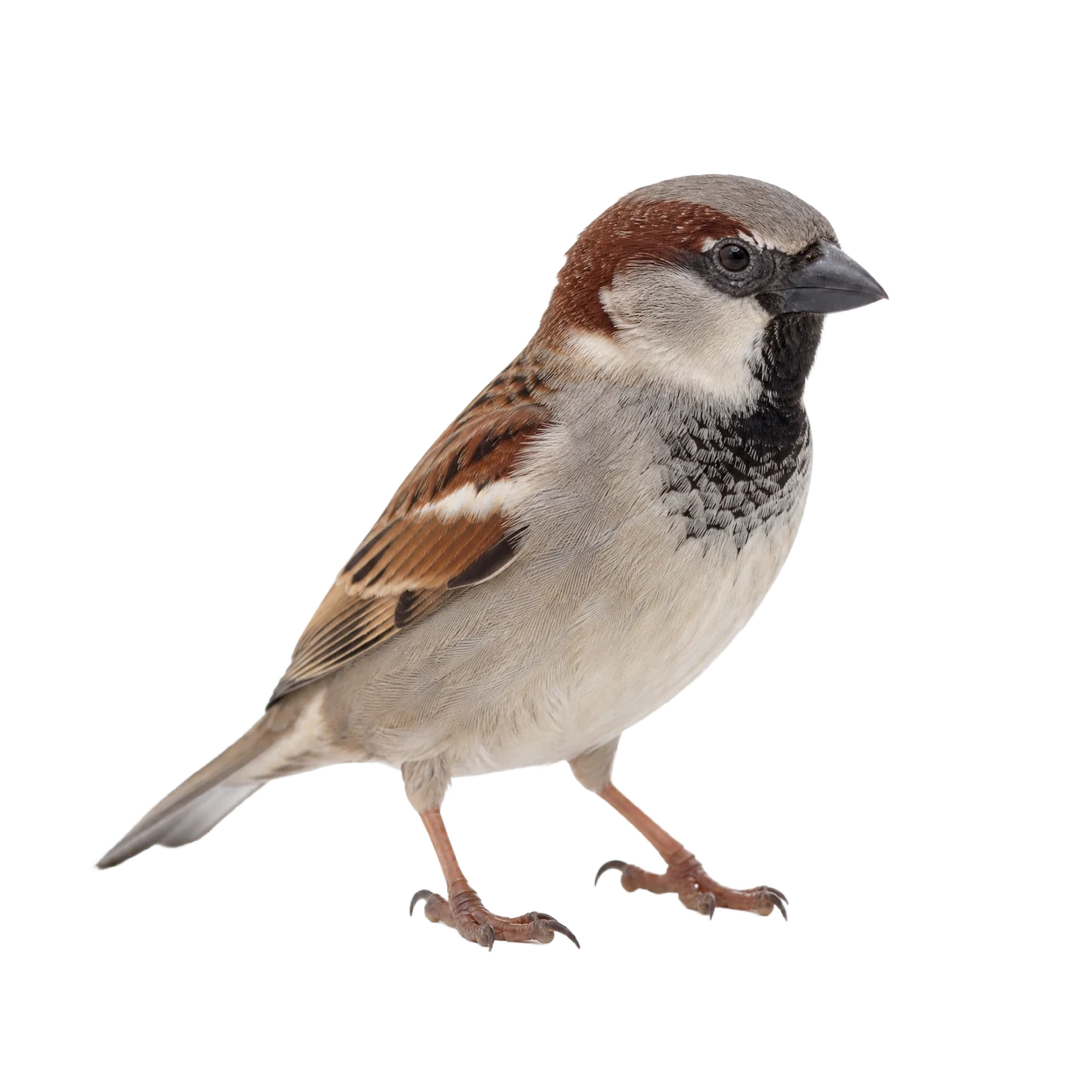
Birds seek safe shelter to nest and protect themselves from predators and weather. Damaged soffits, unprotected vents, gaps in siding and spaces under roofing are open invitations. Once a pair establishes itself, it returns to the same spot every year — and invites others to settle nearby.
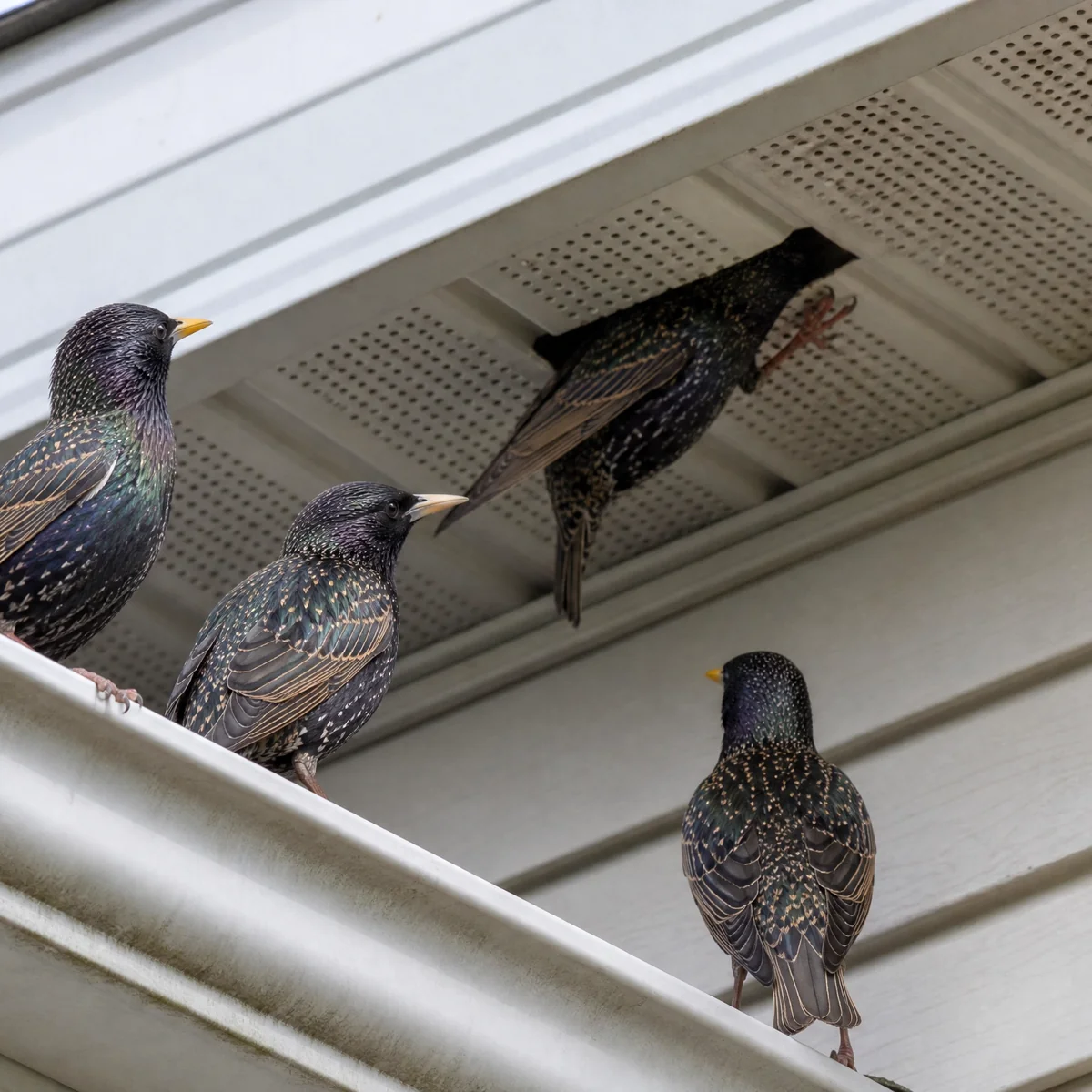
Species identification, locating all nesting points, assessing existing damage and entry points. Some species are protected by law — our intervention always complies with federal and provincial regulations.
Installation of exclusion devices that allow birds to exit without being able to return. Sealing of all entry points: soffits, vents, siding joints, masonry openings. We use durable materials that resist breakthrough attempts.
Birds damage insulation, ventilation ducts, soffits and siding. We repair structural damage caused by nesting and droppings contamination.
Removal of nests, accumulated droppings and contaminated materials. Disinfection of affected areas. Bird droppings contain pathogens (histoplasmosis, cryptococcosis) — professional cleanup is important for occupant health.
In Canada, the Migratory Birds Convention Act protects most wild birds during active nesting (generally April to August). We strictly comply with these regulations. For non-protected species (pigeons, starlings, house sparrows), intervention is possible year-round. We'll advise you on the best time to act.
Not through the same entry points — our sealing is designed to hold. However, birds may attempt to open new access points if the building has other weaknesses. That's why our inspection covers the entire building, not just the current entry point.
Yes. Pigeon and starling droppings can contain the fungus Histoplasma capsulatum, which causes histoplasmosis (a respiratory disease). Dry droppings are particularly dangerous because contaminated dust disperses into the air. Cleanup must be done with proper protective equipment.
Yes, and it's often the ideal time. Birds are less active in nesting and entry points are easier to identify when nests are empty. Winter sealing prevents spring nesting.
Cost depends on the extent of damage, number of entry points and accessibility (height, roof type). We provide a free, detailed estimate before any work begins.
Outaouais
Gatineau, Hull, Aylmer, Buckingham, Chelsea, Wakefield
Ottawa and area
Bilingual service across the river
Laurentians
MRC Antoine-Labelle, Mont-Laurier, Rivière-Rouge, cottages and forested properties
Free estimate. Exclusion, sealing, repair and cleanup.