
Business hours
- Monday [8 a.m. - 5 p.m.]
- Tuesday [8 a.m. - 5 p.m.]
- Wednesday [8 a.m. - 5 p.m.]
- Thursday [8 a.m. - 5 p.m.]
- Friday [8 a.m. - 5 p.m.]
- Saturday [10 a.m. - 4 p.m.]
- Sunday [10 a.m. - 4 p.m.]
Insects we treat
Dozens of black-and-red insects on your sun-facing wall. They slip through windows, cluster in the corners of your rooms, and drop from your curtains. Every fall, it's the same story.
The boxelder bug (*Boisea trivittata*) is one of the most common fall pests in the Outaouais. Where there are Manitoba maples (boxelder trees), there are boxelder bugs. And when they decide to overwinter in your home, they arrive by the hundreds.
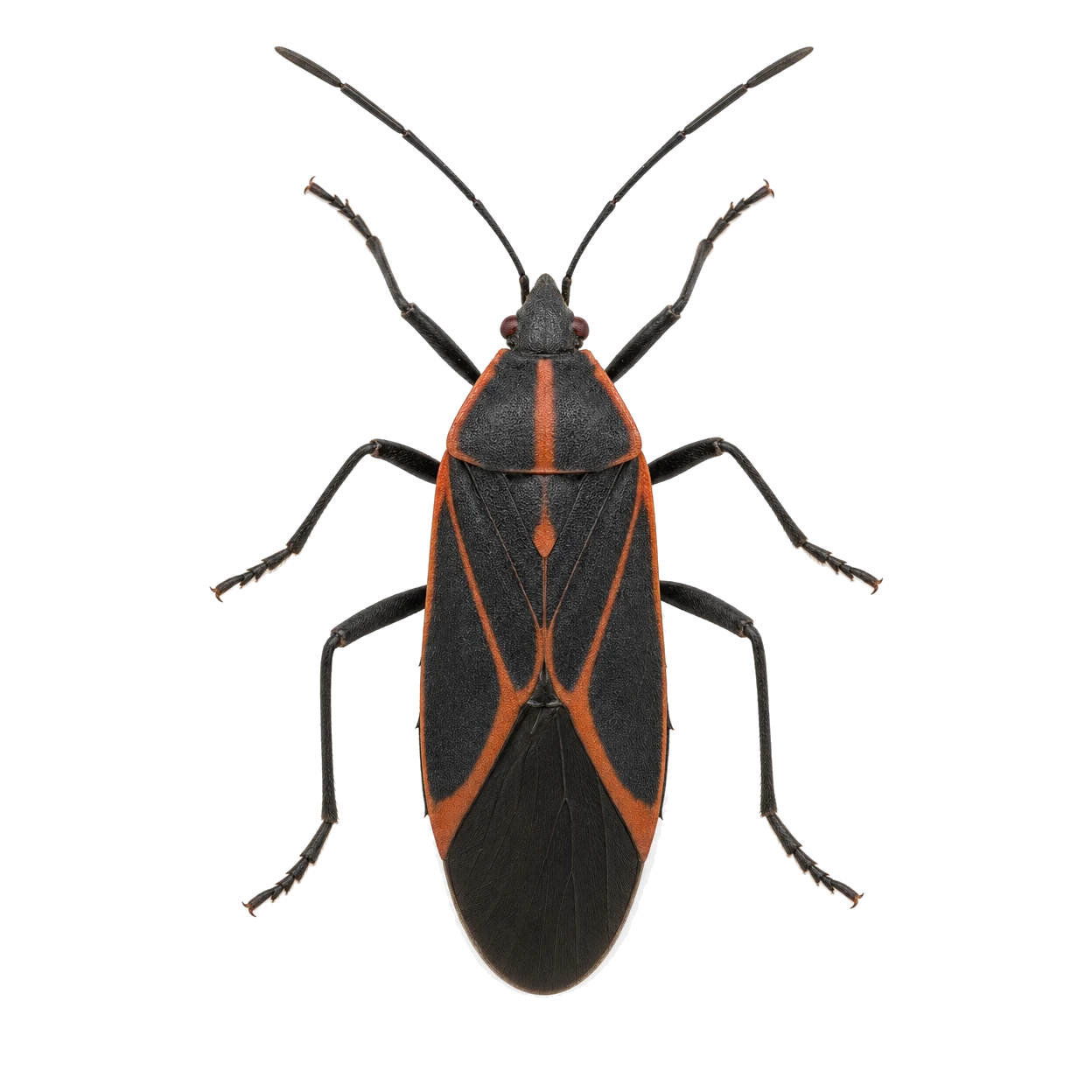
Boxelder bugs don't bite, don't transmit diseases and don't cause structural damage. So why call an exterminator? Because when 200 or 300 settle into your walls, windows and ceilings, it's a nuisance that's hard to live with — especially when it comes back every year. The cycle: In spring and summer, they feed on Manitoba maple seeds. In fall, they migrate to warm surfaces (south- and west-facing facades) and look for cracks to spend the winter inside. The following spring, they wake up and try to get out — often ending up inside your home.
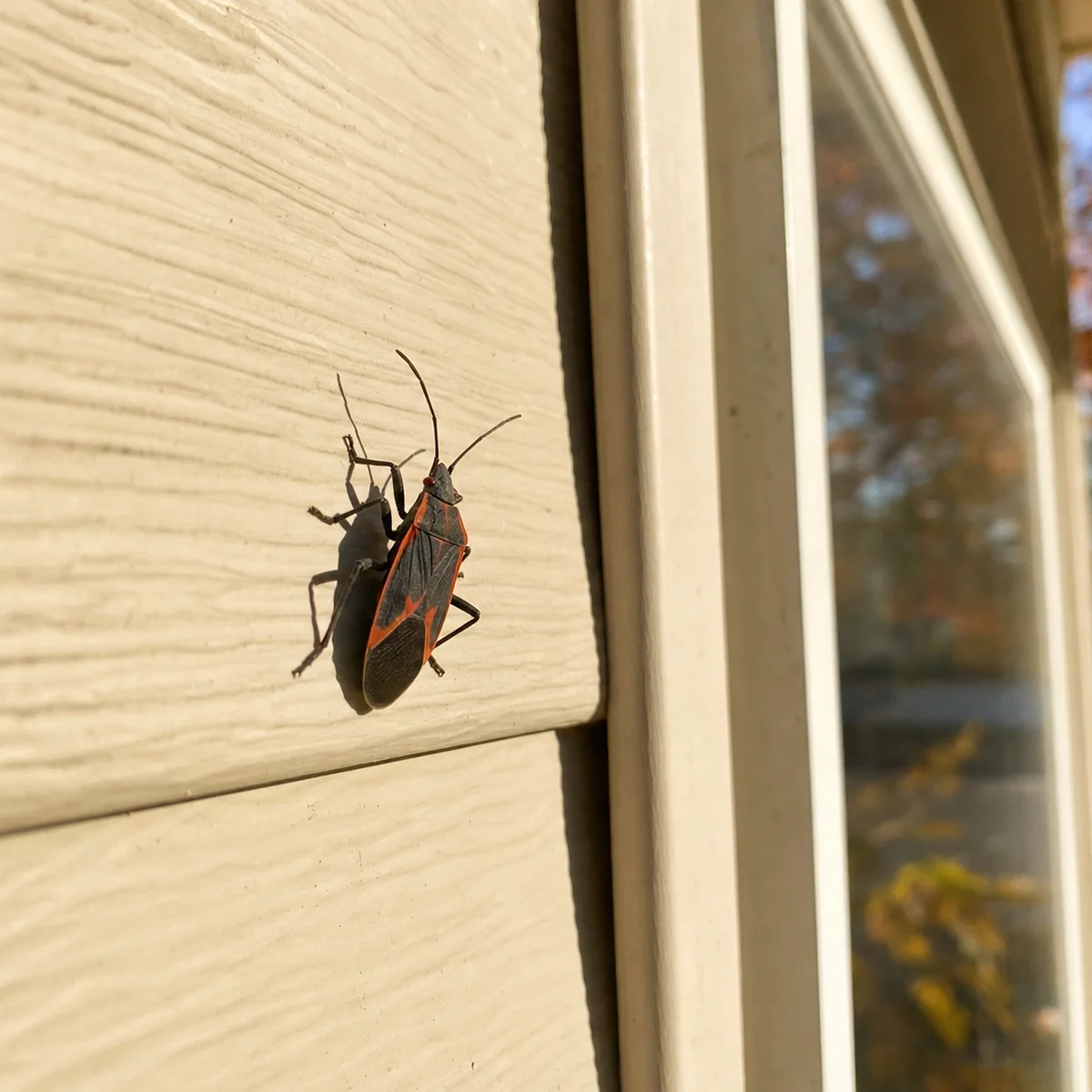
Identifying entry points and aggregation zones on your property. We also check for nearby Manitoba maples (the source of the problem).
Health Canada-approved residual products applied to facades and infiltration points before the fall migration. This is the most effective treatment.
If the infestation is already established, targeted treatment of concentration areas (attics, wall cavities, window frames).
Sealing entry points, recommendations on managing surrounding vegetation (including pruning or removing nearby Manitoba maples).
No. They don't bite, don't sting and don't transmit diseases. Their nuisance is purely due to their numbers. However, they can stain light surfaces with their droppings and give off an unpleasant smell when crushed.
Two factors: nearby Manitoba maples (boxelder trees) and unsealed entry points on your facade. Boxelder bugs are attracted to warm sun-facing surfaces — if your south or west wall has cracks, they'll find them.
Late August to mid-September, before the bugs start migrating toward your home. A preventive perimeter treatment at that time is far more effective than trying to manage them once they're in your walls. If you're reading this mid-invasion, call anyway — we can significantly reduce the problem.
It helps long-term, but boxelder bugs can fly several hundred metres. Even if your tree is removed, those in the neighbourhood can still feed the population. Perimeter treatment remains necessary.
Outaouais
Gatineau, Hull, Aylmer, Buckingham, Chelsea, Wakefield
Ottawa and area
Bilingual service across the river
Laurentians
MRC Antoine-Labelle, Mont-Laurier, Rivière-Rouge, cottages and forested properties
Free estimate. Preventive or curative treatment. Guaranteed.
Mickaël, André or Daniel will assess your situation and recommend the right time to intervene. Late-summer preventive treatment gives the best results.