
Business hours
- Monday [8 a.m. - 5 p.m.]
- Tuesday [8 a.m. - 5 p.m.]
- Wednesday [8 a.m. - 5 p.m.]
- Thursday [8 a.m. - 5 p.m.]
- Friday [8 a.m. - 5 p.m.]
- Saturday [10 a.m. - 4 p.m.]
- Sunday [10 a.m. - 4 p.m.]
Wildlife we capture
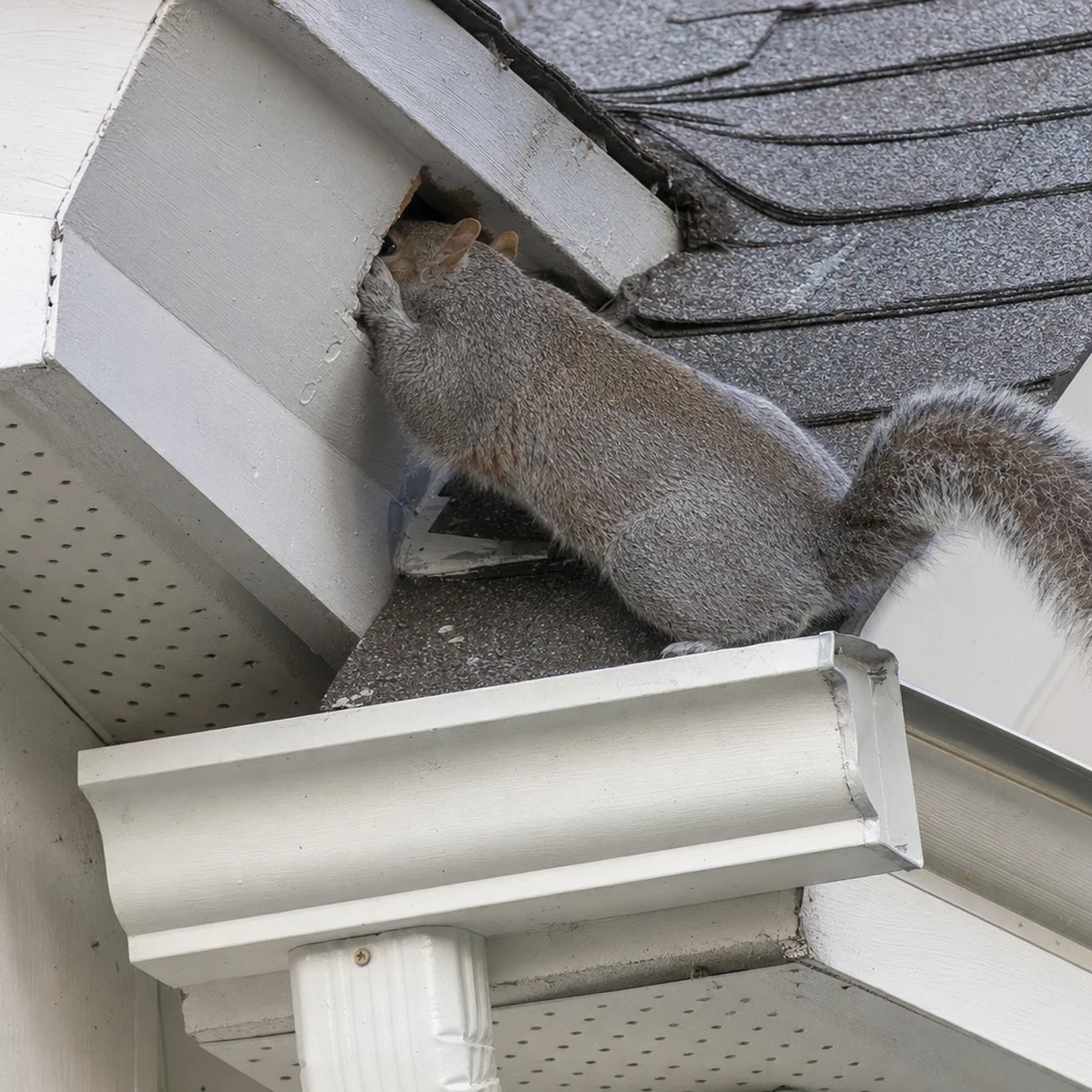
Rapid scratching in the walls early in the morning. A round hole in the soffit. Chewed electrical wires in the attic. The smell of urine starting to seep through the ceiling.
Squirrels are cute — until they move in. They chew electrical wiring (fire risk), destroy insulation, contaminate the attic and cause structural damage. And they don't leave on their own — your attic is more comfortable than any tree.
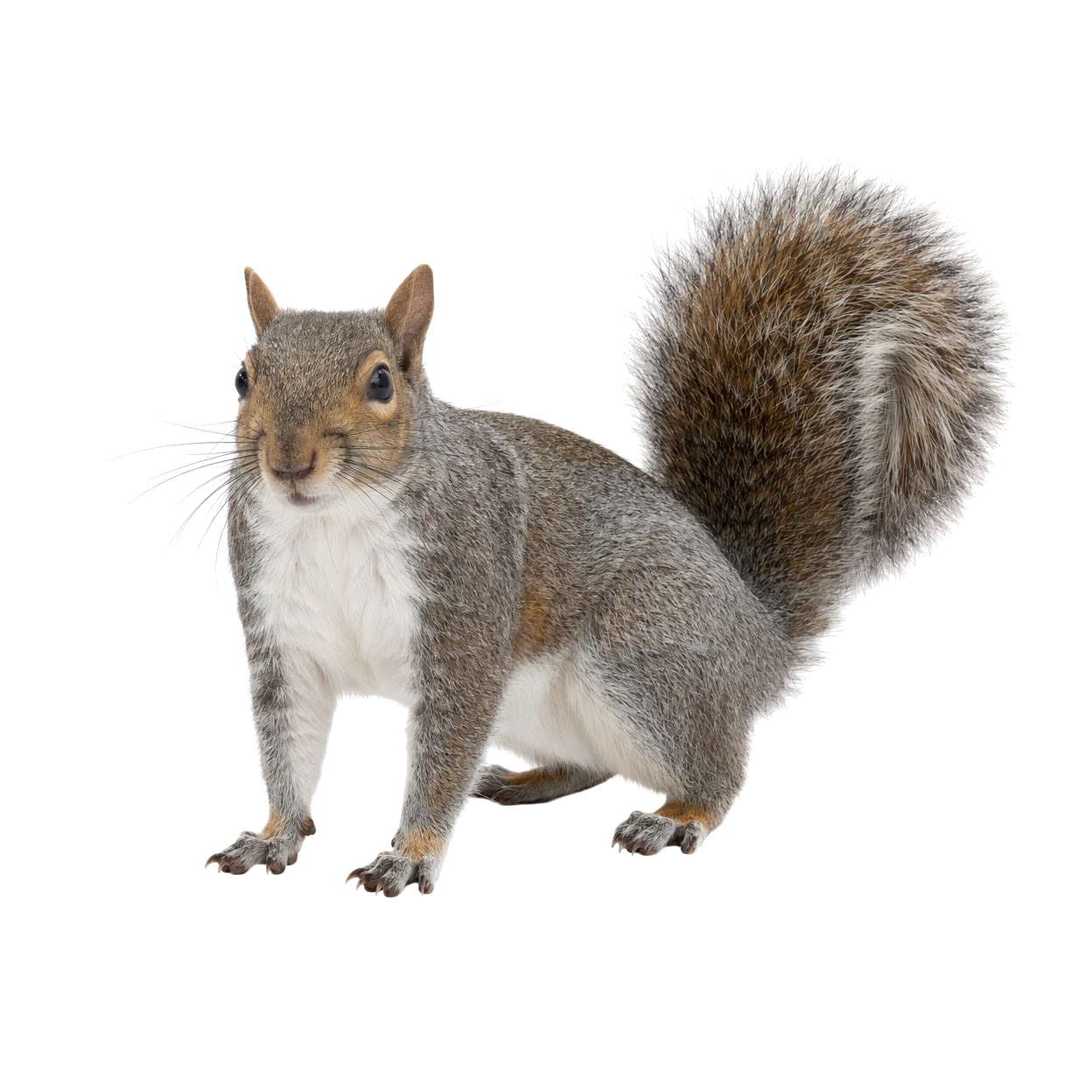
The species determines the strategy: the grey squirrel is solitary, the flying squirrel lives in colonies. The approach is fundamentally different.
Depending on the situation: safe traps or one-way exclusion doors that let the animal out without allowing re-entry.
Squirrels chew through wood, plastic and thin aluminum. We use resistant materials (galvanized steel, welded mesh) to permanently seal all access points.
If insulation is contaminated or damaged, we replace it. Disinfection and repair of chewed wiring if needed.
If it's at night, it's probably a flying squirrel (or a raccoon). Grey and red squirrels are active during the day. Identification matters — the intervention strategy differs.
Yes, if the entry points aren't sealed. That's why capture without exclusion isn't enough. We seal all access with resistant materials.
Very well, especially for grey squirrels. The animal exits through the one-way door and can't get back in. We then permanently close the access point. For flying squirrel colonies, we combine trapping and exclusion.
It depends on the scope. A recent squirrel = minor damage and sealing. A flying squirrel colony settled for months = insulation to replace, wiring to check, full cleanup. It's all included in our estimate.
Outaouais
Gatineau, Hull, Aylmer, Buckingham, Chelsea, Wakefield
Ottawa and area
Bilingual service across the river
Laurentians
MRC Antoine-Labelle, Mont-Laurier, Rivière-Rouge, cottages and forested properties
Free estimate. Humane capture. Permanent exclusion.