
Business hours
- Monday [8 a.m. - 5 p.m.]
- Tuesday [8 a.m. - 5 p.m.]
- Wednesday [8 a.m. - 5 p.m.]
- Thursday [8 a.m. - 5 p.m.]
- Friday [8 a.m. - 5 p.m.]
- Saturday [10 a.m. - 4 p.m.]
- Sunday [10 a.m. - 4 p.m.]
Insects we treat
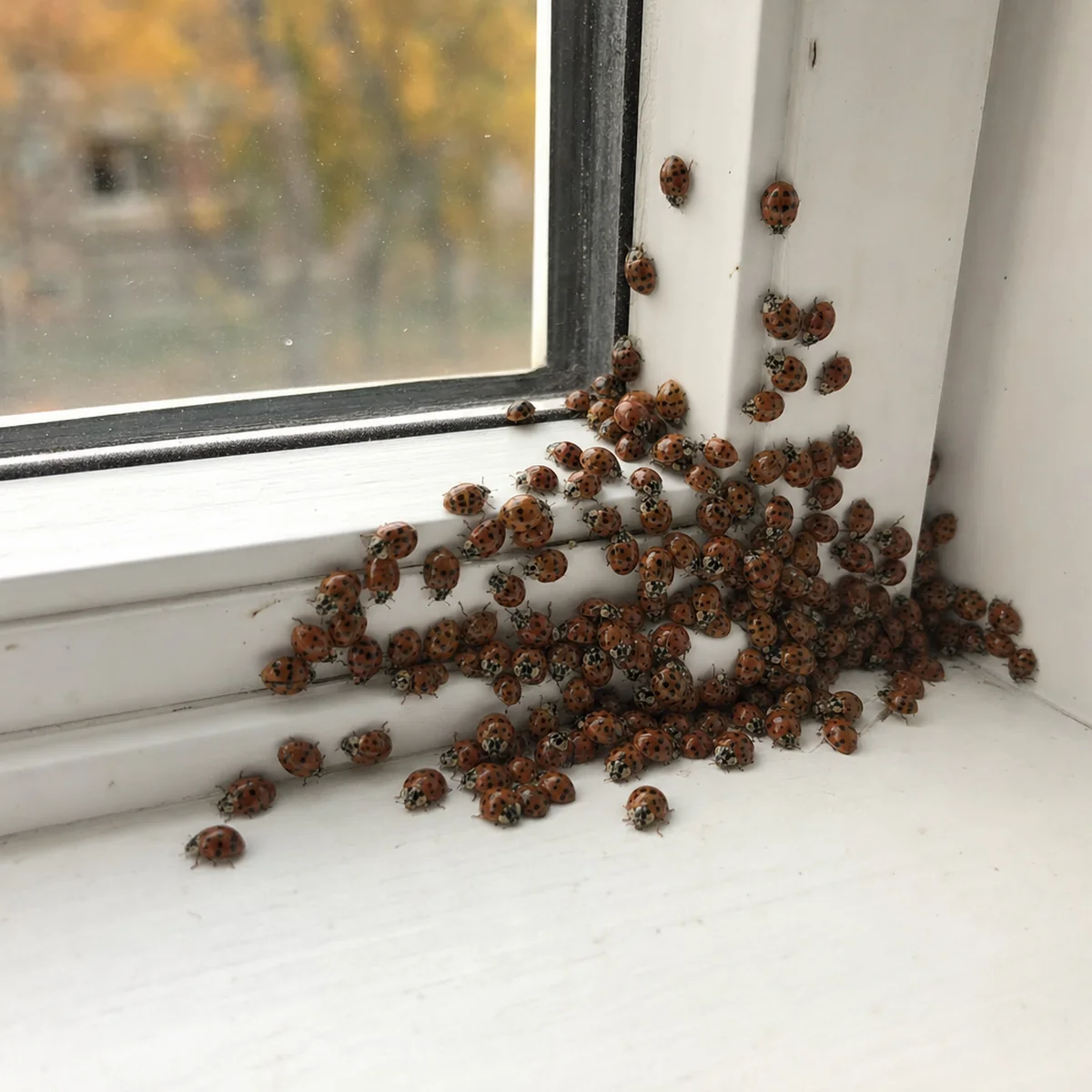
Every fall, dozens — sometimes hundreds — of ladybugs invade your windows, door frames and ceilings. You vacuum them up, pick them off, and they're back the next day. And that acrid smell when you crush them.
These aren't the native ladybugs of your childhood. The Asian lady beetle (Harmonia axyridis) is an invasive species that infiltrates homes en masse in the fall to overwinter — and comes back year after year if nothing is done.
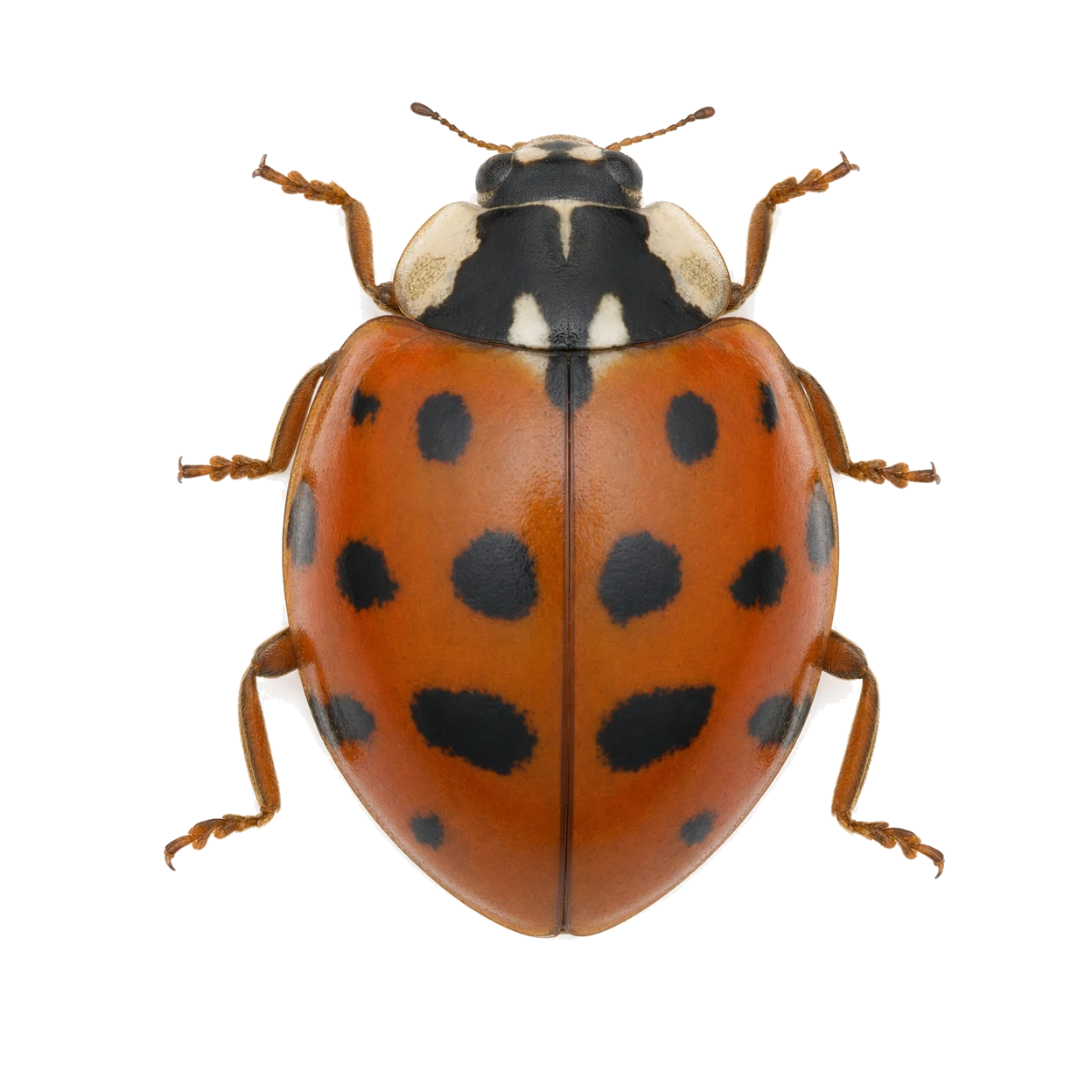
Asian lady beetles seek warm shelter as soon as temperatures drop in September–October. They gather by the hundreds on sun-facing facades, then slip through the smallest crack: window frames, soffits, siding joints, cable entry points. The problem: once inside, they release aggregation pheromones that attract even more lady beetles to the same spot. Vacuums and home remedies only manage the symptoms — the entry point stays open.
We identify exactly where the lady beetles are getting in: cracks, failing joints, soffits, damaged screens.
Health Canada-approved residual products applied to entry points and exterior aggregation zones, before the fall invasion period.
If the infestation is already inside, targeted treatment of concentration areas (attics, wall cavities, window frames).
Specific recommendations for sealing entry points and reducing your facade's attractiveness.
Not directly dangerous, but far from harmless. They can bite lightly, secrete a yellowish fluid that stains surfaces and gives off an unpleasant odour, and trigger allergic reactions (rhinitis, conjunctivitis) in sensitive individuals. In large numbers, they become a serious nuisance.
Lady beetles leave pheromones on surfaces where they've gathered. The following year, these chemical traces attract new lady beetles to exactly the same location. Without treatment and sealing, the cycle repeats indefinitely.
Ideally before the invasion, in late summer or early fall (August–September). A preventive perimeter treatment is far more effective than trying to manage hundreds of lady beetles already settled in your walls. If they're already there, we still intervene — but prevention remains the best strategy.
Vacuuming temporarily clears surfaces, but doesn't solve anything. Caution: crushing or vacuuming them with a bagless vacuum releases their foul-smelling fluid. If you vacuum, use a bag and discard it outside immediately. The real solution is to block the entry.
Outaouais
Gatineau, Hull, Aylmer, Buckingham, Chelsea, Wakefield
Ottawa and area
Bilingual service across the river
Laurentians
MRC Antoine-Labelle, Mont-Laurier, Rivière-Rouge, cottages and forested properties
Free estimate. Preventive or curative treatment. Guaranteed.
Mickaël, André or Daniel will assess your situation and recommend the right time to intervene. Ideally, call before fall.