
Business hours
- Monday [8 a.m. - 5 p.m.]
- Tuesday [8 a.m. - 5 p.m.]
- Wednesday [8 a.m. - 5 p.m.]
- Thursday [8 a.m. - 5 p.m.]
- Friday [8 a.m. - 5 p.m.]
- Saturday [10 a.m. - 4 p.m.]
- Sunday [10 a.m. - 4 p.m.]
Wildlife we capture
Scratching noises in the walls at night. Small black droppings along the baseboards. A flour bag chewed open in the pantry. The smell of urine settling into a cupboard.
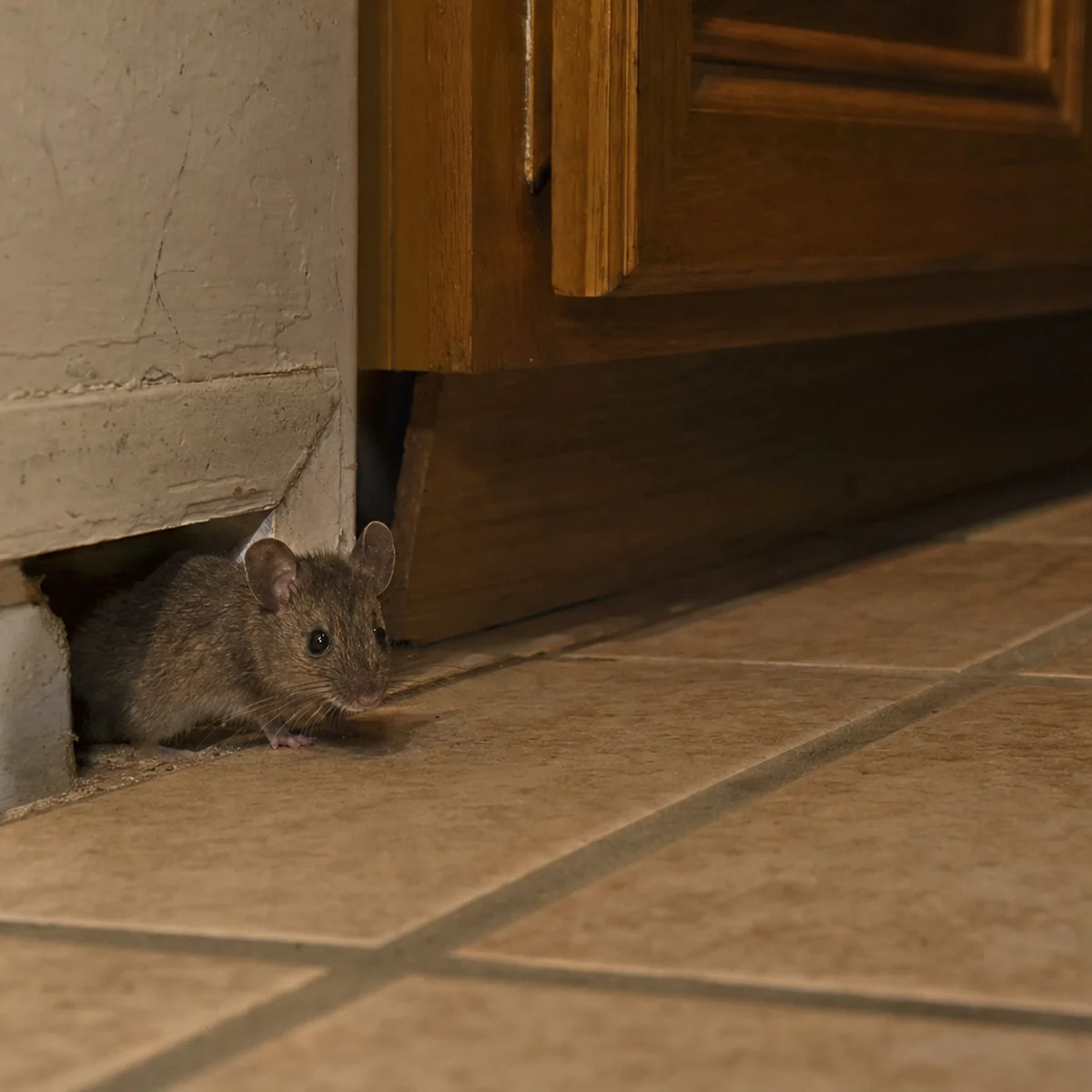
If you see one mouse, there are probably 10 to 30 you don't see. The house mouse is the most common rodent in homes — and in fall, when temperatures drop, it's a massive invasion. A single female can produce 5 to 10 litters per year, each with 6–8 pups. The math is simple: time is working against you.

You've set snap traps and glue traps. You catch a few. But they keep coming. Here's why: traps kill individuals, but the colony reproduces faster than you can catch. And as long as entry points aren't sealed, new mice keep getting in. A mouse can squeeze through a 6 mm hole — the size of a pencil. Your home likely has dozens of entry points you don't suspect.
Secured bait stations and traps strategically placed along the travel routes identified during inspection. Health Canada-approved products, safe for children and pets.
Systematic inspection: foundation, pipe entries, door frames, soffits, ventilation openings. Sealing with resistant materials (steel wool + caulking, metal mesh).
Station checks, strategy adjustments, elimination confirmation. Long-term prevention advice.
Typical signs: black droppings (5–7 mm) along walls and under sinks, scratching noises in walls at night, chewed food, urine smell in cupboards, small grease marks along baseboards (mice always follow the same paths).
Not necessarily. If your home provides food and warmth, they stay year-round. Fall is the peak entry period, but without sealing, the colony becomes permanent.
A good hunter reduces the visible population, but doesn't control a colony in the walls. And mice quickly learn to avoid areas where the cat roams.
With our approach (extermination + sealing), the population drops significantly in 1–2 weeks. Complete elimination takes 3–4 weeks with follow-up. Sealing ensures it doesn't start over.
Outaouais
Gatineau, Hull, Aylmer, Buckingham, Chelsea, Wakefield
Ottawa and area
Bilingual service across the river
Laurentians
MRC Antoine-Labelle, Mont-Laurier, Rivière-Rouge, cottages and forested properties
Free estimate. Extermination + sealing. Guaranteed.