
Business hours
- Monday [8 a.m. - 5 p.m.]
- Tuesday [8 a.m. - 5 p.m.]
- Wednesday [8 a.m. - 5 p.m.]
- Thursday [8 a.m. - 5 p.m.]
- Friday [8 a.m. - 5 p.m.]
- Saturday [10 a.m. - 4 p.m.]
- Sunday [10 a.m. - 4 p.m.]
Wildlife we capture
Heavy noises in the attic at night. A ripped-off soffit. Droppings the size of a small dog's in the roof space. Your dog won't stop barking at the ceiling.
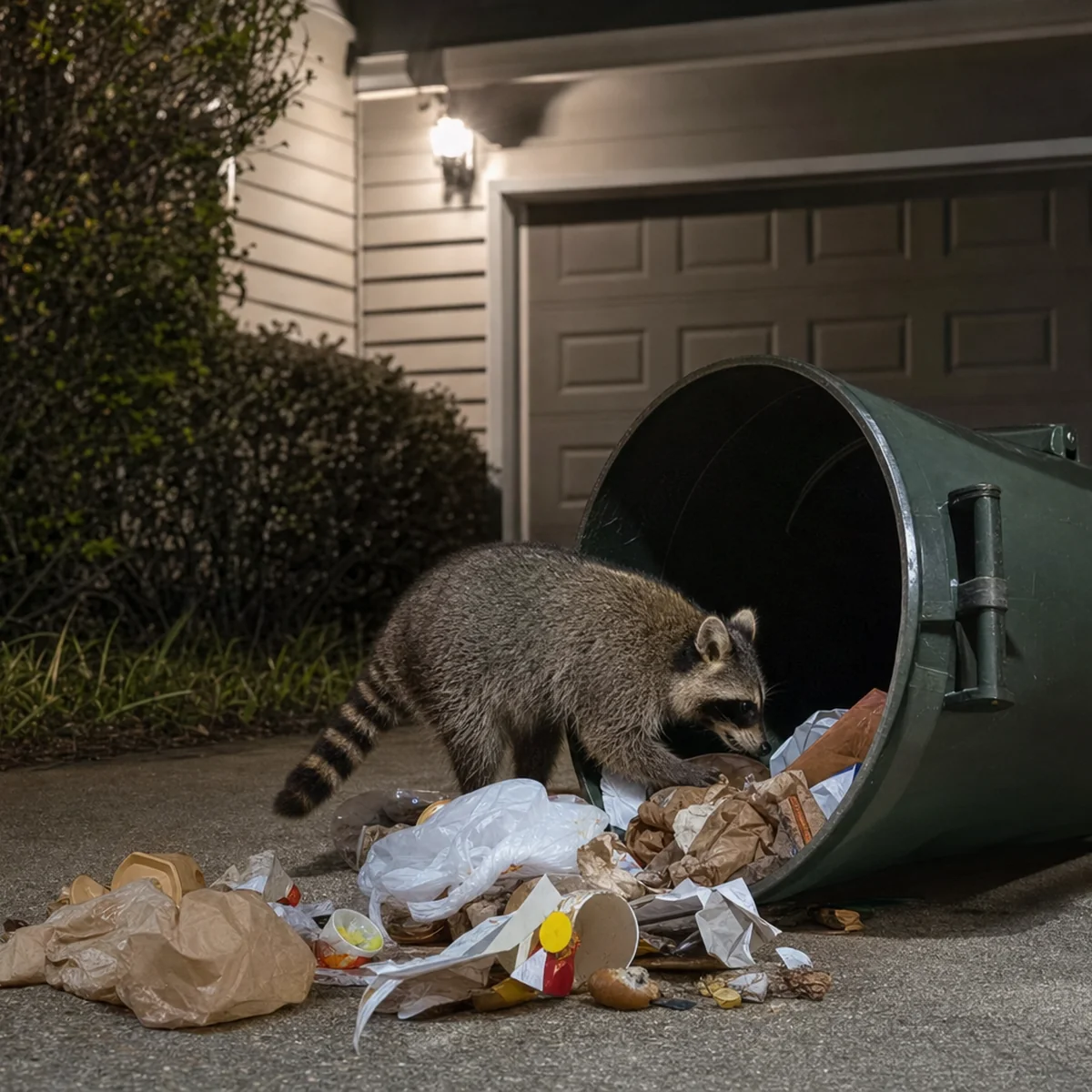
The raccoon is the most destructive residential intruder in the Outaouais. Intelligent, powerful and determined, it can rip off aluminum soffits, tear through mesh and force open ventilation openings. And once it settles into your attic, it destroys insulation, contaminates the space with droppings and causes major structural damage.
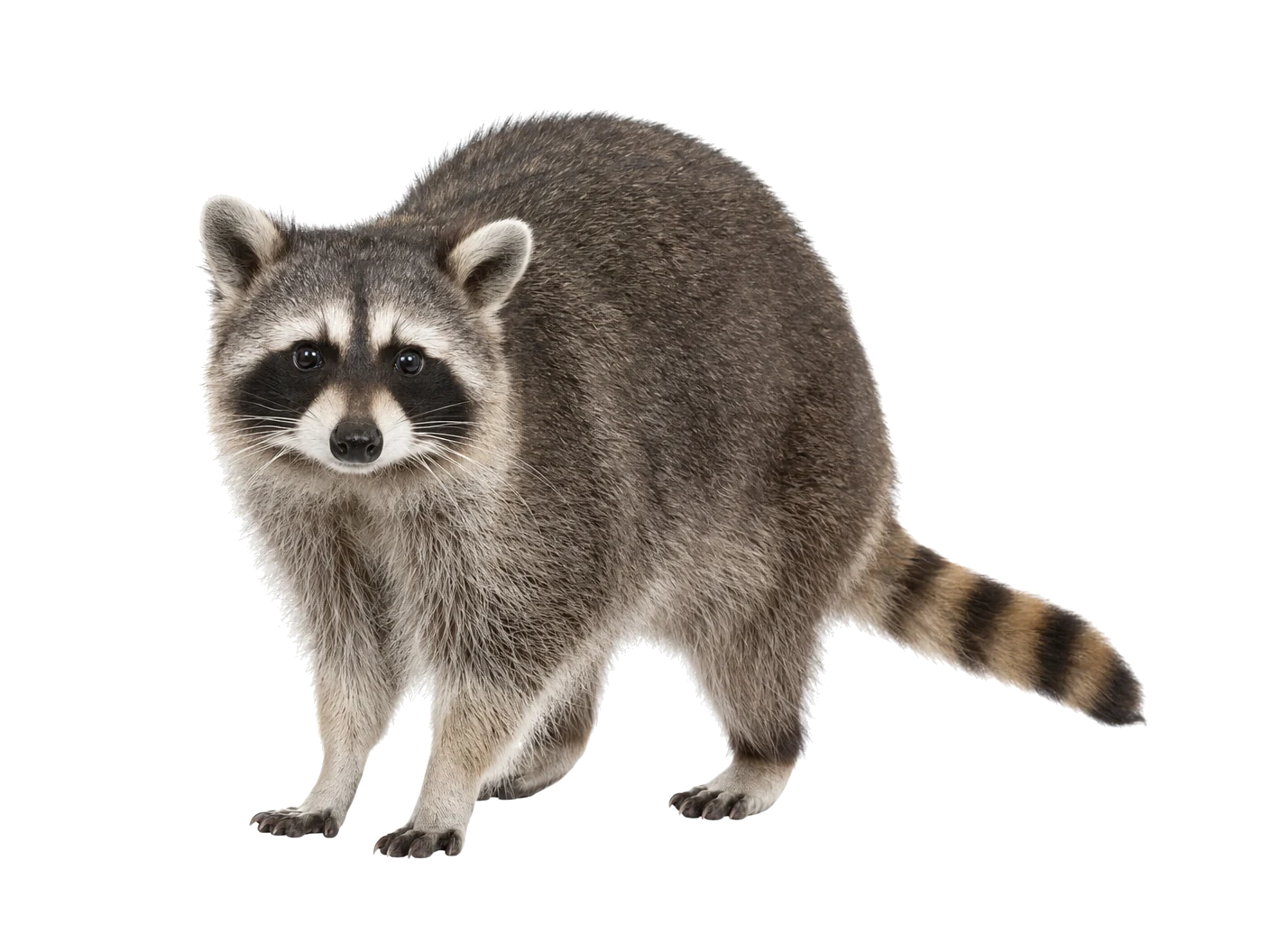
The raccoon isn't an ordinary pest. It's protected by provincial regulations — capture and relocation must follow strict protocols. It's also dangerous: a potential carrier of rabies and intestinal parasites (Baylisascaris) whose eggs in droppings are infectious to humans. In spring, females look for safe places to give birth. Your attic is ideal: warm, dry, protected from predators. If a female settles in with her babies, the intervention becomes more complex and more urgent.
Identifying entry points (soffits, ventilation, chimney), assessing damage and detecting babies (in spring, this is critical).
Safe traps compliant with provincial regulations. If a mother and her young are present, we manage the family together to avoid separating the babies.
To appropriate habitat, away from residential areas, following Wildlife Ministry protocols.
Sealing all entry points with resistant materials. A raccoon is strong enough to reopen an improvised seal — we use professional techniques.
If needed: removal of droppings and contaminated insulation, disinfection, insulation replacement, minor repairs.
No. A raccoon settled in an attic has no reason to leave — it's found an ideal habitat. And the longer it stays, the more damage accumulates.
Yes. Baylisascaris (roundworm) is present in raccoon droppings and its eggs are infectious to humans. Cleanup must be done with protective equipment. Don't pick up droppings with bare hands.
Professional exclusion is the only reliable solution. Raccoons remember access points and come back to test them. Professional sealing with resistant materials is essential.
Above all, don't do anything yourself. Separating a mother from her young creates a dangerous situation (the mother becomes aggressive) and can result in the babies' death. Call us — we handle the entire family.
Outaouais
Gatineau, Hull, Aylmer, Buckingham, Chelsea, Wakefield
Ottawa and area
Bilingual service across the river
Laurentians
MRC Antoine-Labelle, Mont-Laurier, Rivière-Rouge, cottages and forested properties
Free estimate. Humane capture. Exclusion and restoration.
Mickaël, André or Daniel will assess the urgency and respond quickly. Situations with babies are prioritized in spring.