
Business hours
- Monday [8 a.m. - 5 p.m.]
- Tuesday [8 a.m. - 5 p.m.]
- Wednesday [8 a.m. - 5 p.m.]
- Thursday [8 a.m. - 5 p.m.]
- Friday [8 a.m. - 5 p.m.]
- Saturday [10 a.m. - 4 p.m.]
- Sunday [10 a.m. - 4 p.m.]
Wildlife we capture
Heavy noises under the floor. Droppings much larger than a mouse's. A chewed plumbing pipe. Teeth marks on wood, concrete — even metal.
A rat isn't a big mouse. It's an intelligent, cautious and destructive animal that colonizes basements, wall cavities, sewers and hard-to-reach areas. One rat spotted usually means 5 to 20 more. And they don't get caught easily — poorly placed traps make them even more wary.
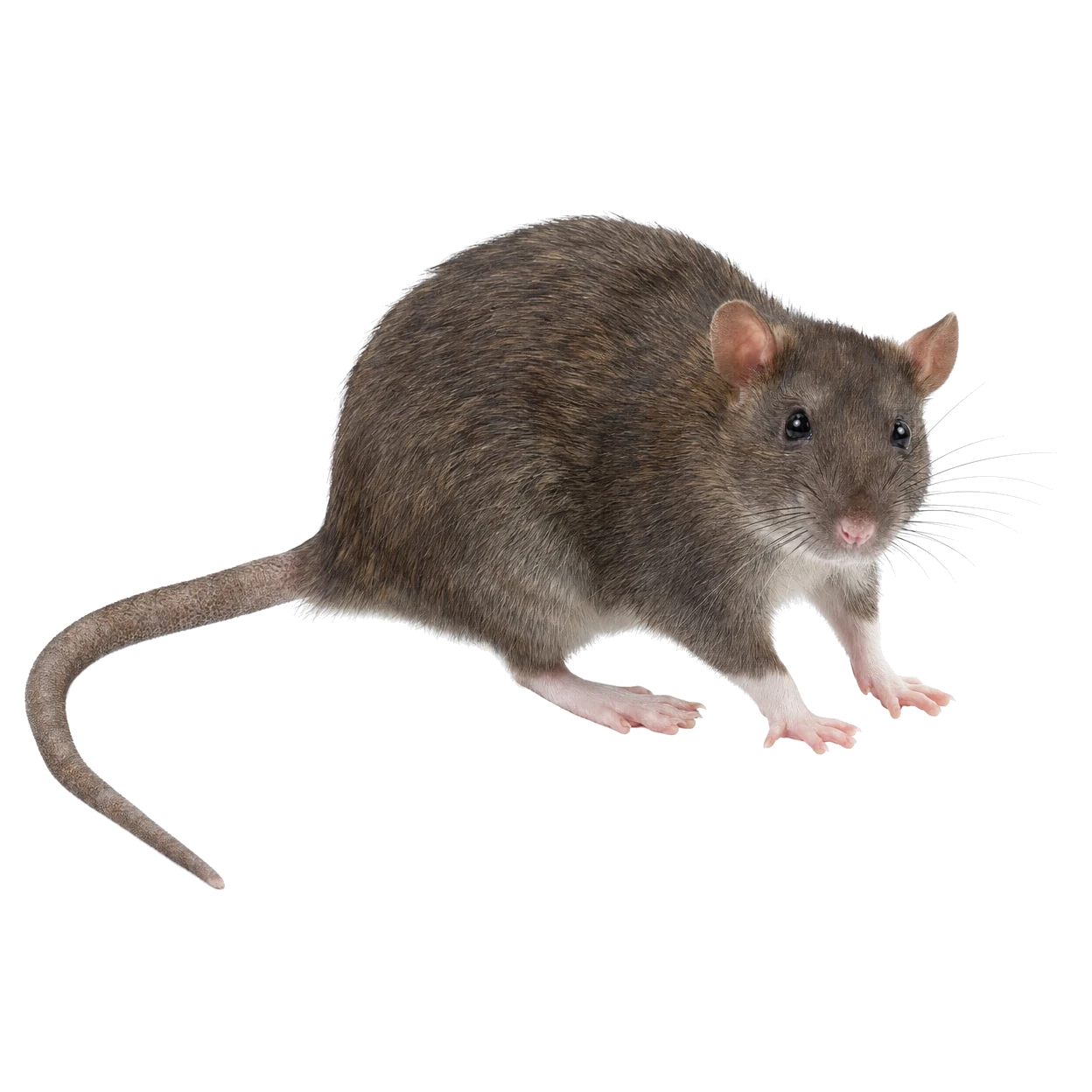
The Norway rat — the dominant species in our region — is neophobic: it instinctively avoids anything new in its environment. A poorly placed trap or a wrong bait makes it suspicious for weeks. That's why amateur attempts often make the problem worse.
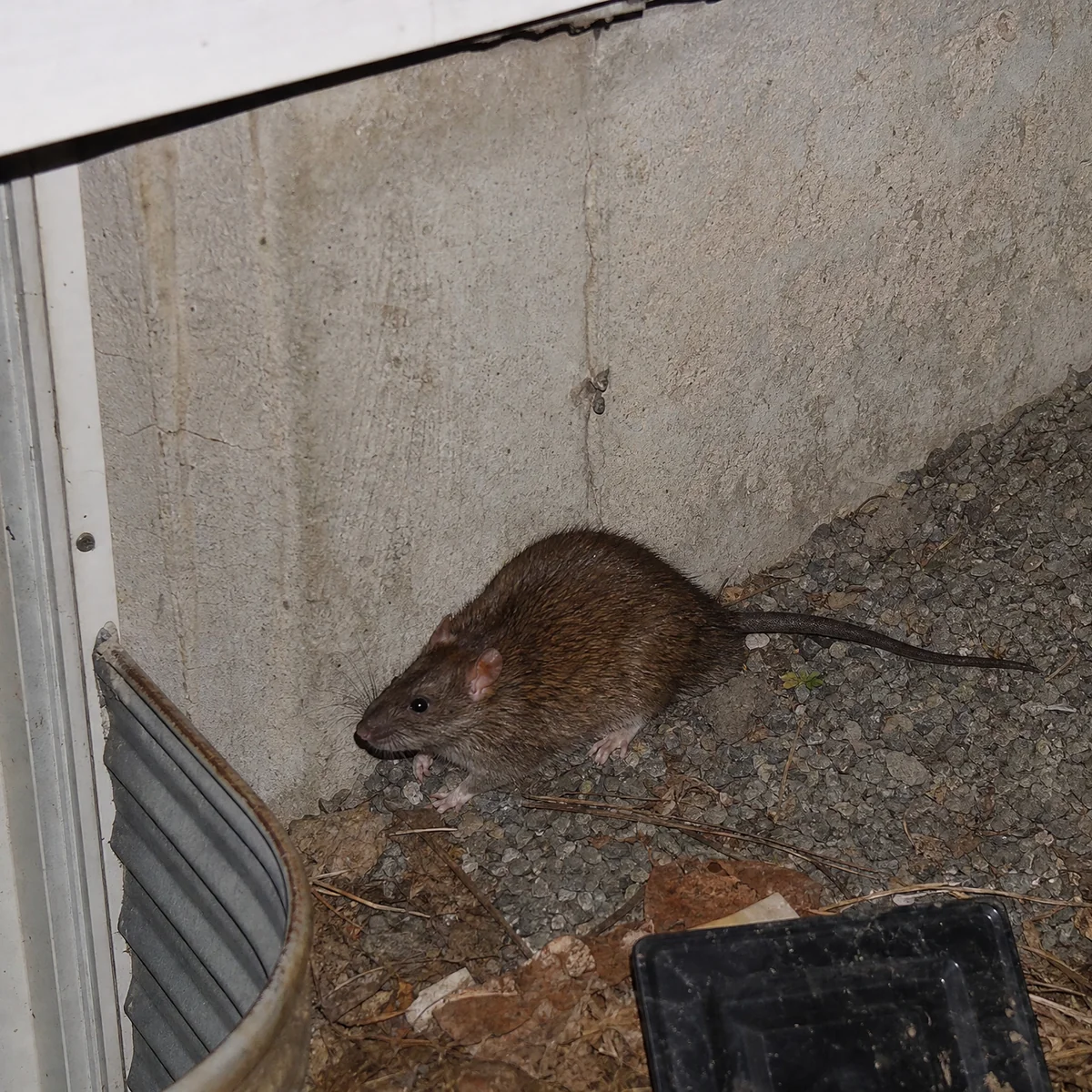
Identifying travel routes (grease marks, droppings, teeth marks), nests and entry points. Rats always follow the same paths — identifying them is the key.
Secured bait stations strategically placed on identified routes. Professional-grade products that rats can't find at a hardware store. Adjusted based on the colony's response.
Rats fit through a 2 cm hole. We seal with rodent-resistant materials (steel, cement, welded mesh). Special attention to pipe entries, sewers and foundations.
Rats are cautious and the colony adapts. Several weeks of follow-up are needed to confirm elimination and adjust the strategy if required.
Rat droppings are larger (15–20 mm vs 5–7 mm for mice). The noises are heavier. The teeth marks are wider and deeper. If unsure, send us a photo of the droppings.
Longer than for mice. The neophobia of rats extends the process. Expect 4–8 weeks with follow-up for a confirmed elimination. It's a matter of patience and strategy.
They can kill individuals, but without a comprehensive strategy (correct placement, sealing, follow-up), the colony survives and adapts. Plus, a poisoned rat that dies in a wall creates an unbearable smell for weeks.
That's a common entry point. The Norway rat is an excellent swimmer and can come up through plumbing. We inspect drain access and recommend backflow valves if necessary.
Outaouais
Gatineau, Hull, Aylmer, Buckingham, Chelsea, Wakefield
Ottawa and area
Bilingual service across the river
Laurentians
MRC Antoine-Labelle, Mont-Laurier, Rivière-Rouge, cottages and forested properties
Free estimate. Professional multi-phase strategy. Guaranteed.