
Business hours
- Monday [8 a.m. - 5 p.m.]
- Tuesday [8 a.m. - 5 p.m.]
- Wednesday [8 a.m. - 5 p.m.]
- Thursday [8 a.m. - 5 p.m.]
- Friday [8 a.m. - 5 p.m.]
- Saturday [10 a.m. - 4 p.m.]
- Sunday [10 a.m. - 4 p.m.]
Wildlife we capture
Your lawn is striped with surface tunnels. Your shrub roots are chewed. Your tulip bulbs have disappeared. The mulch around your foundation is swarming with small rodents.
The field mouse — more precisely the meadow vole — isn't a house mouse. It's an outdoor rodent that destroys gardens, lawns, shrubs and young trees by digging a network of shallow tunnels. And unlike house mice, voles don't come inside — they ravage your property.

The most common mistake: treating a vole like a mouse. Voles are herbivores (roots, bulbs, bark), live exclusively outdoors and create surface tunnels. Mice are omnivores, enter buildings and live in walls. The traps and baits used for mice are ineffective against voles.
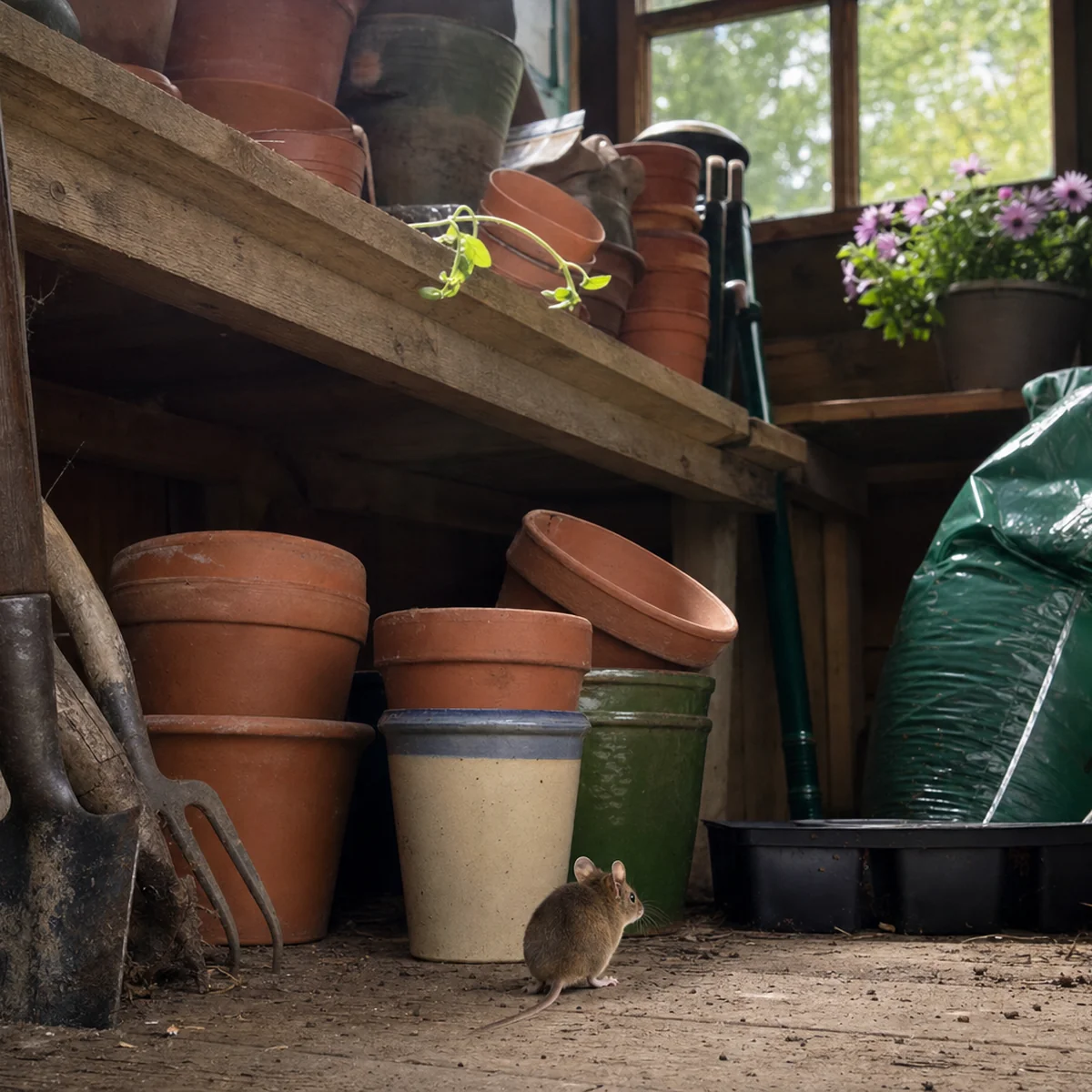
Confirming they're actually voles (not moles or mice). Identification determines the strategy.
Bait stations specific to voles, placed directly in active tunnels. Products adapted for outdoor use.
Advice to make your property less attractive: reduce mulch near foundations, mow short in fall, protect tree trunks with spiral guards.
Vole populations fluctuate (3–5 year cycles). Spring and fall follow-ups prevent population explosions.
Moles dig deep and leave mounds of dirt (molehills). Voles dig near the surface — you see tunnels about 3–4 cm wide in the grass. Voles eat roots; moles eat earthworms.
A hunting cat can help reduce the population, but can't control an established infestation. Voles reproduce rapidly (5–10 litters per year) and their tunnels protect them from predators.
Spring (after snowmelt) and fall (before snow) are the best times. In spring, winter damage is visible and active tunnels are easy to identify.
Yes. Spiral tree guards or mesh at the base of trunks effectively protect the bark in winter. It's a simple, inexpensive preventive measure that we systematically recommend.
Outaouais
Gatineau, Hull, Aylmer, Buckingham, Chelsea, Wakefield
Ottawa and area
Bilingual service across the river
Laurentians
MRC Antoine-Labelle, Mont-Laurier, Rivière-Rouge, cottages and forested properties
Free estimate. Specialized vole treatment. Prevention advice.